Ghost Fire T-Shirt Design: Embroidery Project Review
Last October I had a boutique owner ask if I could create a small batch of custom sweatshirts with a playful spooky vibe—something that would sell well at a Halloween market but still feel wearable through fall. I spent an evening scrolling through digital files and stopped when I came across T-shirt Design - Ghost Fire. It wasn't the usual screaming skull or dripping blood lettering. There was a mood to it, a flicker of personality that immediately made me think about how it would look stitched out on a heavyweight cotton hoodie, thread catching the light across the ghost's edges. That's the kind of design evaluation that matters when you're not just saving a file on your hard drive but actually planning to turn it into a finished product someone will wear or gift.
What This Artwork Feels Like Before a Single Stitch
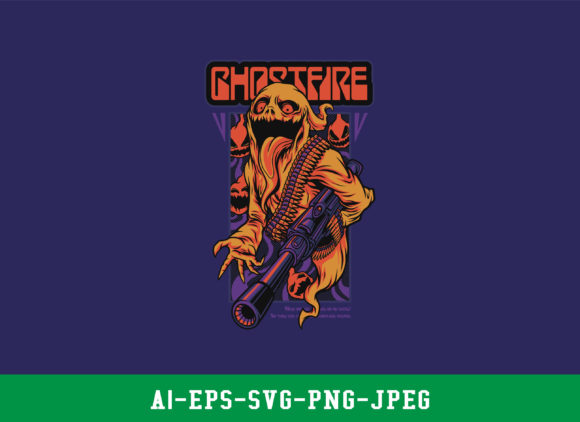
The first thing that hits you is the contrast between something soft and something fierce. The ghost shape has movement—it doesn't sit flat like a static icon. There's a suggestion of flame or smoke trailing around the form, which gives it a sense of light even though you're looking at a digital silhouette. As a print template, the Graphics are clean and deliberate, with a balance of thick main lines and finer accent details. That matters a lot when you begin to imagine how the design translates into thread.
Too many embroidery-ready artworks look great on screen but turn muddy the moment a fill stitch hits textured fabric. Here, the ghost fire theme carries enough negative space inside the design to breathe. You can already picture where satin stitch borders would define the outer shape and where a lighter fill stitch or even a carefully placed running stitch could create flame wisps without overwhelming the fabric. The personality is slightly mischievous, not horror-movie grim, which broadens the audience immediately—kids, teens, adults who like a bit of whimsy during the holiday season.
Translating Graphics into Embroidery Language
It's easy to forget that a digital embroidery file isn't automatically the same as the artwork you buy. When you're looking at T-shirt Design - Ghost Fire as a starting point, you need to mentally separate the visual impact from the stitch mechanics. The flame details will probably work best as layered satin stitch elements with a slight angle shift, or even as a lighter fill stitch set behind the main ghost so the thread density doesn't stack up too high. Dense stitching on a thin t-shirt is the fastest way to ruin drape and cause puckering, so you'll want to review stitch density carefully during digitizing.
The ghost itself has enough body to hold a substantial fill without looking bulky, but watch those tiny flickering corners. If the flame tips get too narrow, a running stitch might be a smarter choice than trying to force a satin stitch into a space that's barely two millimeters wide. I always recommend testing the design on scrap twill or cotton canvas first—something with a tight weave that won't distort—to see how the smallest elements register before you commit to a customer piece.
Where Ghost Fire Belongs in a Real Embroidery Project
Let's get practical. I ended up sampling T-shirt Design - Ghost Fire on a medium-gray fleece crewneck, using a soft orange-to-yellow variegated thread for the flame elements and a charcoal gray for the ghost outline. The contrast popped without screaming. That sweater went straight into a client's Halloween mini collection and sold out in two weekend markets. Parents bought it for themselves and then came back asking for matching kids' sizes, which told me the design had genuine broad appeal.
Beyond sweatshirt embroidery, this motif fits naturally on tote bag design projects. A sturdy canvas tote with the ghost fire stitched in the bottom corner looks intentional and boutique-quality. Aprons are another strong candidate—especially for someone who loves baking Halloween treats and wants a themed kitchen look that doesn't feel disposable. I've also seen similar motifs work well as an embroidered patch sewn onto denim jackets or added to a cap with a curved needle plate. The shape is compact enough to fit most hoop sizes without constant re-hooping, which speeds up production if you're a small shop product maker who values time.
One project I'd love to try is a set of baby embroidery onesies with this ghost scaled down to about two inches wide. The design has a soft friendliness that would suit nursery decor or a first-Halloween gift, but I'd be extra cautious about stabilizer choice on that stretchy cotton rib. A no-show mesh stabilizer and a gentle fill stitch density would keep the back of the embroidery smooth against a baby's skin.
Fabric, Color, and Surface Considerations
Here's where my testing notes get specific. T-shirt Design - Ghost Fire relies on light and shadow, which means your thread colors have to do real work. On a dark background like black or charcoal, the flame thread needs real brightness—consider a neon orange or a glowing yellow—to keep the design from turning murky. On lighter fabrics, the ghost shape stands out more, but the fire can look washed out if you aren't deliberate with saturation. Run a printable mockup test in grayscale first, just printing the artwork at actual size on paper and holding it against different fabric swatches. That quick preview saves you from choosing a thread palette that fights the background.
Be careful with thin fabric and stretchy fabric. T-shirts made from lightweight jersey will shift under dense stitching, and even with a solid stabilizer underlay, a motif with dense adjacent flames can cause tension lines. I learned this the hard way on a rayon-blend tee during a rush order. Use a heavier cutaway stabilizer, hoop firmly but don't over-stretch, and lower the overall stitch count if needed. Textured fabric like waffle knit or terry cloth can make the finer flame tips disappear, so either enlarge the design slightly or simplify those edge details in your embroidery file preparation.
Items that need frequent washing—kitchen towels, everyday hoodies, baby blankets—require special attention. The flame elements with their smaller satin borders might fray over time if the stitch length is too short. I'd bump up the underlay stitching and lock down all the flame edges with a double running stitch outline to protect the shape through dozens of wash cycles.
Visual Appeal, Customer Trust, and Product Value
When you put a design like this onto a physical product, you're not just selling a garment; you're selling a reaction. Ghost Fire gives you an easy entry into holiday embroidery that doesn't feel mass-produced. Buyers recognize effort when the stitching is crisp, the colors are well-chosen, and the placement feels deliberate. That kind of handmade product quality directly builds customer trust, especially on platforms like Etsy where repeat buyers look for craft business sellers who nail the details.
From a branding standpoint, this design can anchor a small themed collection. Picture a matching set: a pillow cover with the ghost fire motif, a coordinating tea towel, and a simple cotton tote. The consistency boosts brand consistency and makes your booth at a craft fair feel like a curated shop rather than a jumble of unrelated items. Personalized gift potential is strong too—add initials or a name below the ghost using a clean sans-serif font, and you have a ready-made finished product that feels custom without complex design work.
The theme leans spooky but stays friendly, which means it suits a wide range of commercial embroidery uses. Wedding favors for an October bride might sound unusual, but I've seen similar ghost motifs stitched onto cocktail napkins for a moody autumn reception. That versatility—the ability to be cute, slightly edgy, or even romantic depending on thread colors and product pairing—raises the perceived value of whatever you're creating.
Practical Checks Before You Buy or Stitch
Since the product description for T-shirt Design - Ghost Fire doesn't list exact file formats, hoop size requirements, or stitch-ready file types, you need to do your own confirmation. This is standard when purchasing from a digital design store. Before investing time in digitizing, verify whether the file you receive is a design asset in a common graphic format or already prepared as an embroidery file with stitch data. If it's just the artwork, you'll need to digitize it yourself or hire someone to create the machine embroidery design file for your specific machine format.
Check the commercial embroidery license carefully if you plan to sell finished products. Many Print Templates and Graphics sets allow personal use but restrict physical product sales unless you upgrade. Nothing stings more than discovering a licensing issue after you've already stitched a dozen items for a shop order.
Test the design on the exact product you intend to sell. If you're making custom apparel for a client, run one full sample, wash it twice, and inspect the design. Look for loose threads along the flame tips, any puckering around the ghost's wider fill areas, and color fastness of specialty threads. Those small inspections separate an okay product from a professional one. Also check how the design reads at a normal viewing distance—about three feet away for a sweatshirt. Some details that look amazing up close become blurry at arm's length, and with a ghost fire theme, you want that ethereal glow to be visible, not invisible.
Designer's Final Notes on Ghost Fire
After working with T-shirt Design - Ghost Fire across several real projects, I'd call it a strong, flexible starting point for embroidery project work that needs personality without excessive complexity. The ghost fire mood hits that seasonal sweet spot, and the graphics hold up well when digitized with attention to stitch balance. For Etsy seller hopefuls, craft fair regulars, or anyone stocking a small handmade shop for autumn, this design can become a reliable seller—provided you put in the prep work on stabilizer choice, thread contrast, and licensing.
If you're still learning machine embroidery design digitizing, this is a friendly test case. The shapes are distinct, the flame accents give you practice with finer detail without overwhelming you, and the results are forgiving on medium-weight fabrics. For experienced stitchers, it's an efficient addition to a seasonal product lineup, especially if you pair it with simple coordinating patterns. Just never skip that first stitch-out on scrap fabric. Seeing the ghost fire come to life in thread is worth the effort, and it'll tell you everything you need to know before your customer ever sees the finished piece.